

#31 — The Illusion of Competence
If you’re not careful, that false confidence can hurt you in the long run


Those of us who work in technology tend to live in a bubble. And to be honest, there are good reasons for that: the January 2026 Anthropic Economic Index shows that a large share of interactions is focused on programming and code. For those of us who are curious and love to learn, it’s hard to remember a more exciting moment than this. Yet understanding what AI is truly changing—and what it remains unable to touch—requires us to look outward, drawing lessons from other disciplines where tools have long augmented human skill.
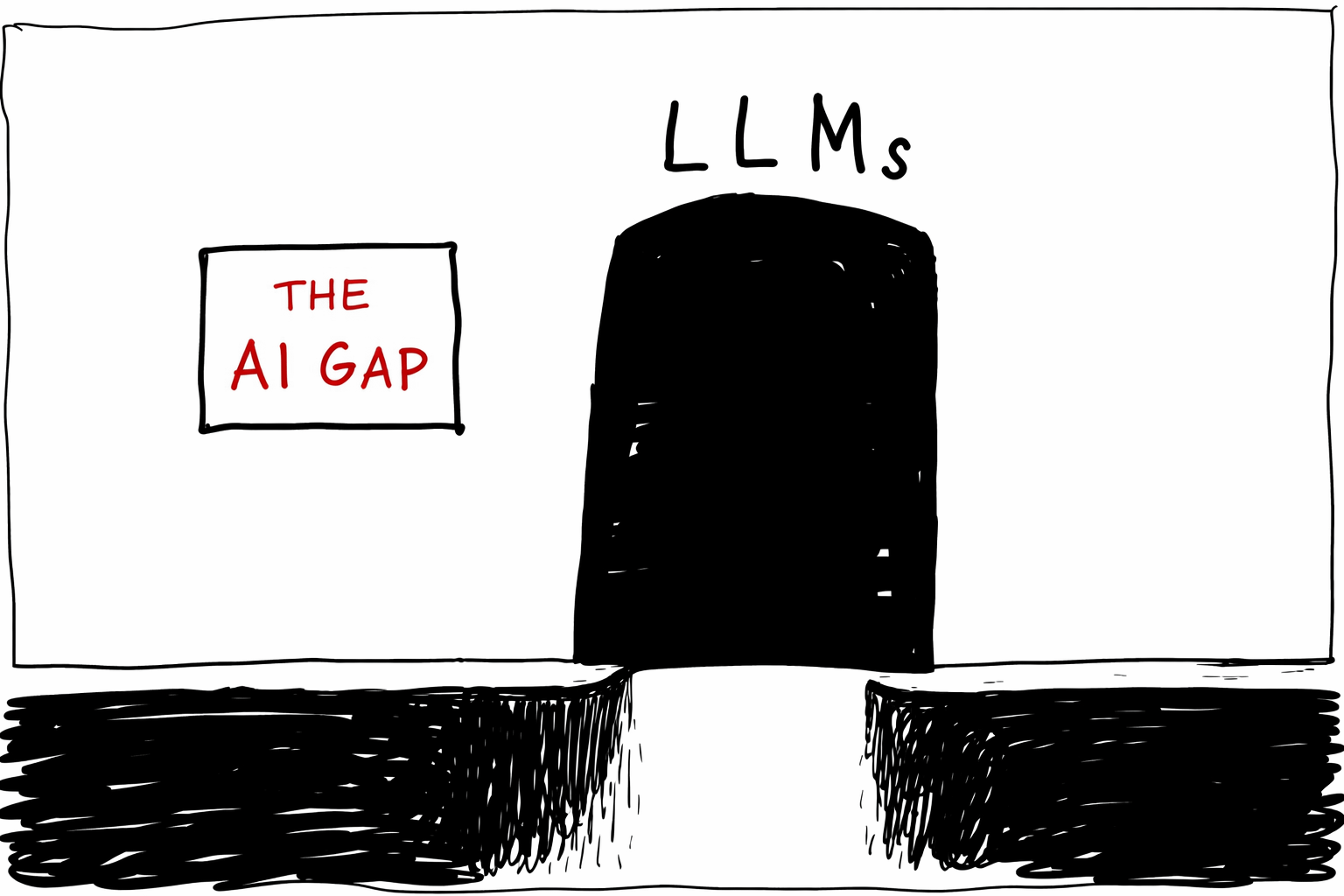
There’s a noticeable gap in how people experience AI today. Some users—typically those with programming expertise—are embracing AI for efficiency, with real cultural impact on their teams, as Iñigo Medina has noted. Lower barriers to code mean more people can contribute, and teams that once had to ask for changes can now solve problems on their own. Others use AI constantly too, but mostly for incremental improvements—writing emails, summarizing documents, speeding up routine work. Helpful, yes, but transformative? Not quite.
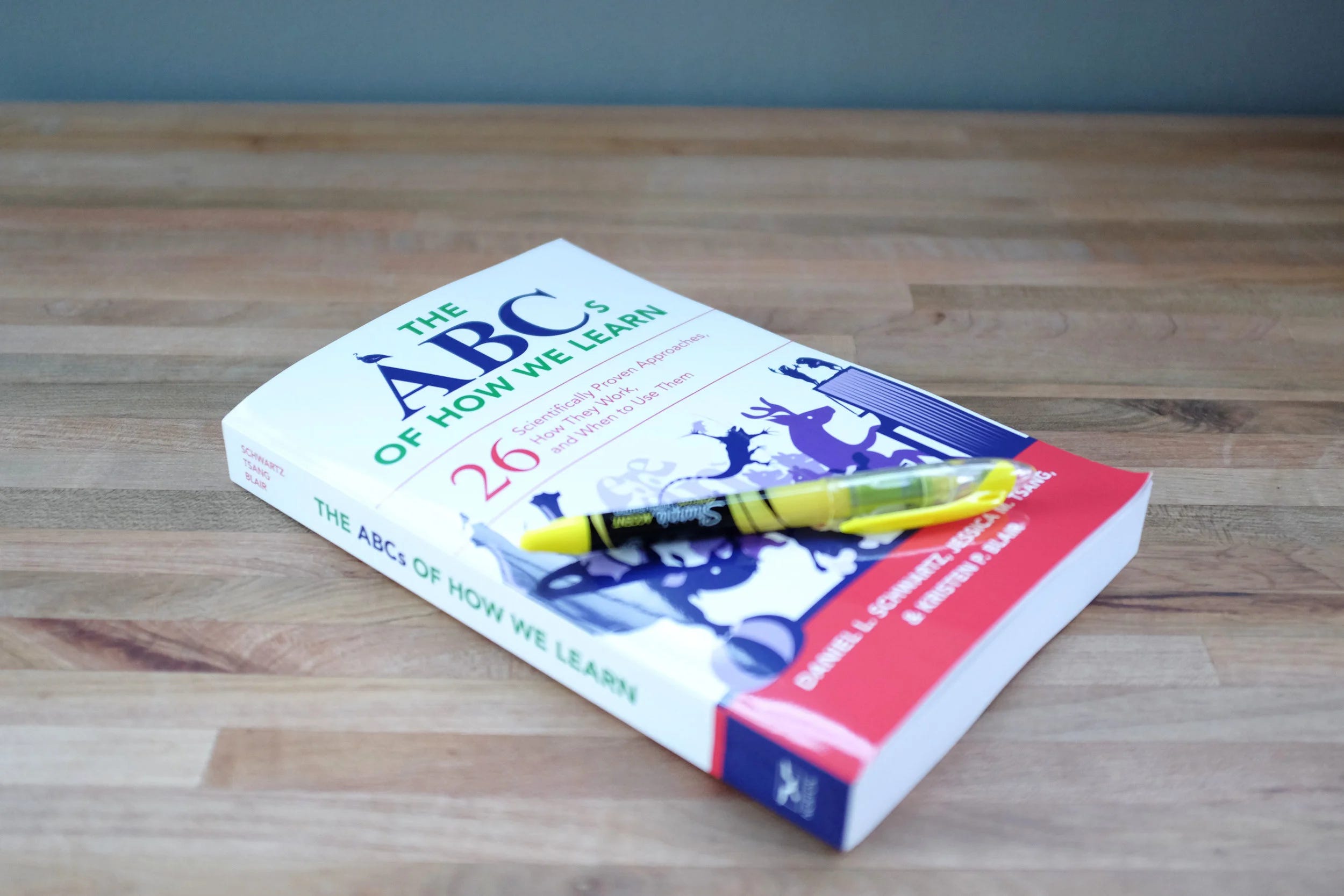
At the same time, this changes how competence shows up. In The ABCs of How We Learn, Schwartz and Tsang define competence as “the feeling that one is capable of achieving desired goals and gaining mastery.” With AI, that feeling and the underlying capability can diverge. When AI-generated work is reviewed in small pieces—diffs, test results, isolated outputs—it often appears solid. Some developers have noted an additional risk: newer AI coding assistants can fail in ways that are hard to detect, producing code that runs and looks plausible while quietly doing the wrong thing—reinforcing the illusion of competence. The code works, tests pass, reviews approve. Over time, though, teams are discovering that understanding the whole still matters. Reading a system end to end, revisiting old code, or making deep changes requires more than “it worked at the time.” It requires someone who has kept a mental model of the whole.
This isn’t a failure of AI so much as a reminder of what it doesn’t provide. AI is very good at producing plausible results. It doesn’t maintain coherence over time—style, structure, long-term maintainability. Think naming conventions that drift, or architectural patterns that fragment across modules—unless a human actively enforces those qualities.
Seen this way, the so-called AI gap and the illusion of competence are part of the same learning curve. Early users extract more value not just from better prompts, but from recognizing when AI output needs human intervention—when to accept, when to revise, when to rebuild from scratch. A recent study published in Science finds that while AI has increased coding output overall, the gains accrue almost entirely to senior developers, with little measurable benefit for early-career users despite higher adoption rates. As organizations mature in their AI use, the challenge becomes balancing delegation with understanding—using AI to move faster without losing sight of how things fit together.
This tension is not new. As a developer recently observed, some of the most productive days involve writing almost no code at all. Time spent observing users, asking questions, and validating assumptions can create far more value than hours of uninterrupted coding—yet these forms of work are often invisible to the metrics we use to define developer productivity.
That perspective becomes clearer when we step outside the tech bubble and borrow ideas from other disciplines—medicine, architecture, skilled trades—where tools have long augmented human work without replacing responsibility or judgment. AI, it turns out, fits that pattern rather well.
The same dynamic is now playing out in education, where the costs of misplaced confidence can be even harder to reverse. The rapid adoption of AI in classrooms appears to be fueling a growing illusion of competence. Maybe students don’t need more shortcuts; they need safeguards against the deskilling that is already underway. Lower lecture attendance, more superficial reading, and heavy reliance on AI form a pattern that makes it easier to get by, but empties learning of its meaning. The cost is not only academic: those small moments of achievement—the “yes, I did it”—that once sustained motivation and pride in one’s work quietly disappear.
Paradoxically, even boring tasks play an important formative role. A deep qualitative study by researchers at Sciences Po suggests that automating them does not necessarily make work more engaging; in many cases, it does the opposite. When such tasks are handed off to LLMs, work can become more alienating and less meaningful. AI does not merely reveal something about our work—the way we use it can actively generate boredom. This is where the confidence trap emerges: we feel more productive because things move faster, while the experiences that build understanding, judgment, and motivation slowly erode.
A similar conclusion is echoed by developers who have pushed AI-assisted coding further than most. After two years of working extensively with agentic systems, Mo Bitar describes returning to writing code by hand—not out of nostalgia, but pure pragmatism. Once factors like code quality, long-term maintainability, and the cost of accumulating technical debt are taken into account, manual coding often turned out to be faster. For software engineers fatigued by vibecoding, his experience serves as a useful counterpoint:
Does EdTech work?
There is now growing evidence that education technology has not delivered on its promises, at least in K–12 settings. As Jared Horvath puts it in a recent The Economist article: “In nearly every context, ed tech doesn’t come close to the minimum threshold for meaningful learning impact.” The case of McPherson Middle School in Kansas follows a familiar script: laptops introduced with high hopes, growing concerns about learning impact, constant distraction, and teachers reduced to digital hall monitors. This is not an outlier. Independent meta-analyses—including a Stanford University review of 119 studies—find that the learning gains associated with ed-tech interventions are generally modest, highly variable, and strongly dependent on context, skill type, and implementation.
The persistence of the ed-tech narrative seems to have more to do with how these tools are promoted than with how they are typically used in practice. Even the most frequently cited “success stories” apply to a small minority of students. Usage data from platforms like Khan Academy show that most students barely engage, and that measurable gains are concentrated among roughly the top 10% of users—often those already motivated or supported at home. At the population level, average effects remain modest.
Taken together, this body of evidence—including the findings discussed above and the recent report from the Brookings Institution—should not be read as an argument against AI in education. Rather, it points to the need for greater care in how these tools are selected, implemented, and evaluated, and for investing just as seriously in the human conditions that make learning possible in the first place.
The thing that makes us human
This week I really enjoyed this episode from the Thoughtbot Podcast (episode 601), where the hosts (Chad Pytel and William Larry) dissect how experienced developers are actually using AI day to day. I agree with their case for maintaining ownership of the codebase and balancing coding enjoyment with AI through small increments, TDD, and treating AI as a pair programmer.
The conversation also surfaces the practical risks of relying too heavily on agents—hallucinated reinventions of built-in framework features, false confidence, and security or architectural gaps in AI-generated systems. Importantly, they don’t stop at the risks: they also discuss where AI genuinely shines, especially in UI prototyping and learning new stacks.
Beyond day-to-day practice, they grapple with broader implications as well: hype-cycle economics, ethics and energy costs, boundaries around creative work, and a likely future where capable local models reduce dependence on cloud LLMs.
Tools mentioned:
VS Code – Main editor used, especially for JavaScript-heavy workflows.
GitHub Copilot – Inline AI assistance inside VS Code.
Zed – New editor being tested, focused on performance and AI-native workflows.
Claude – Used via terminal and editor integrations for coding support.
ChatGPT – Mentioned as an interchangeable LLM option within editor workflows.
Supabase – Cited as a common default backend in AI-generated prototypes.
Lovable – Example of rapid prototyping tools used by non-technical founders.
Why cheating with AI is a question of virtues
This week I’ve been thinking about virtues and the real impact they have on our everyday decisions. A good example is cheating with AI. If we look at it through the lens of the virtue of justice—classically defined as giving each person what is due to them—several forms of injustice quickly emerge when we cheat with AI.
We are unjust to our classmates who are actually putting in the effort; we waste the instructor’s time; and, perhaps most importantly, we are unjust to ourselves, because we claim a level of learning or competence that we haven’t truly developed.

This is where the analogy Josh Brake draws with the so-called cognitive revolution fits especially well. Just as the Green Revolution brought an abundance of food—making it easier to eat well, but also easier to eat poorly—AI today puts intelligence “on tap.” It has never been easier to produce text, solve problems, or generate code. That abundance opens up enormous possibilities, but also new risks.
In such a world, those who have cultivated the virtues needed to use these tools well can truly flourish intellectually. They will use AI as a means to go deeper, not as a way to avoid effort. Following the analogy, they are the ones who know how to choose a healthy cognitive diet. But when abundance is not accompanied by maturity and character, the result is a kind of cognitive intoxication: using the tool not to learn more, but to think less.
For this reason, the problem of cheating with AI is not merely technological or disciplinary; it is deeply formative. The underlying question is not “Can I get away with this?” but “What kind of person am I becoming when I systematically delegate my intellectual effort?”. Here, justice appears again—not only as external justice, but as internal justice: giving yourself what you truly need in order to grow.
This connects to a broader question about the role of the college. For years, higher education has been treated almost exclusively as a space for acquiring competitive skills. That is necessary, but clearly insufficient. In the context of ubiquitous AI, the formation of character—curiosity, intellectual honesty, humility, fortitude, responsibility—stops being a secondary goal and moves to the center.
Perhaps the key question for colleges today is not “How do we respond to AI?” but “How are we forming our students to live intellectually healthy and genuinely human lives in a world of cognitive abundance?”.
If you’d like to go deeper into these questions, you can apply—as I did—to ITiCSE WG10: Teamwork in Computing Education: Skills, Values, and Virtues. Membership application form #1 closes Monday, February 16, 2026 (AoE).

🔍 Resources for Learning CS
→ The World’s Most Important Machine
For over 50 years, transistors got smaller and chips got more powerful, doubling every two years. But around 2015, this progress hit a wall. This is the story of the $400 million machine that broke through: using extreme ultraviolet light, atomically smooth mirrors, and plasmas hotter than the sun, ASML built what most experts thought was impossible, enabling all modern advanced chips.
→ Speeding up NumPy with parallelism
A practical guide to speeding up NumPy: when threading helps, when Numba helps more, and why memory bandwidth caps your gains—plus why “automatic” parallelism can be risky in real code.
→ Faster.dev
Aaron Francis released an education platform focused on building software faster with AI.
→ Introduction to PostgreSQL Indexes
If you’ve ever added an index and been surprised that performance didn’t improve, this guide is worth your time. It explains how PostgreSQL stores data, when indexes help, and when they can make things worse—using real EXPLAIN output and concrete tradeoffs.
→ A BERTopic tutorial
This is a practical playbook for structuring large text corpora, covering data cleaning, model selection, parameter tuning, topic merging, and result validation through visualization and qualitative analysis.
🔍 Resources for Teaching CS
→ Crowdsourcing criteria for statistical infographics
This sheet is used for students to collaboratively propose rubric criteria for evaluating statistical infographics. The activity helps make expectations explicit, builds student ownership of assessment standards, and supports peer learning in a genre that is new to most students.
→ Josh Brake on teaching in Higher Ed
Fascinating conversation between Josh Brake and Bonni Stachowiak on the Teaching in Higher Ed podcast: AI as an “e-bike for the mind,” the risks of replacing effort, why intention, better questions, and accountability matter, practical tools for prototyping small web apps and games tailored to classroom needs (Claude and Gemini), and reading recs—Ursula Franklin and Vonnegut’s Player Piano—as lenses for thinking more clearly about what these tools are doing to us. The episode and show notes can be found here.
→ Stanford CS149 Parallel Computing
A solid Stanford course on parallel computing with a strong focus on real hardware–software trade-offs. Link to Course Playlist | Link to Course Slides.
→ Python for Data Analysis, 3E
The full text of O’Reilly’s Python for Data Analysis (3rd edition) is freely available on the author’s website.
→ Intro to Quantum Computing (Undergraduate)
A practical, funding-friendly path combines Qiskit (hands-on, browser-based labs), Microsoft’s Azure Quantum (self-paced programming intuition), Quirk (visual circuit intuition), and Scott Aaronson’s Quantum Computing Since Democritus for conceptual grounding—enough to make students quantum aware without hardware or heavy math.
🦄 Quick bytes from the industry
→ The creator of OpenClaw
The Austrian engineer Peter Steinberger became a legend in 2010 after releasing a PDF viewer—PSPDFKit—that outperformed Apple’s own. What began as a side project quickly grew into a company whose software now runs on more than a billion devices. After years of intense work, Steinberger burned out, stepped away from tech, and disappeared for a while.
Now he’s back—building in a radically different way. With OpenClaw, a personal assistant that can act directly on your computer, Steinberger works with AI agents not as tools, but as collaborators. He no longer reads most of the code he ships. Instead, he focuses on system architecture and how software feels, treating pull requests as prompt requests.
The key shift, he argues, is “closing the loop”: designing systems where AI can run, test, debug, and validate its own work. The result is faster development—and, paradoxically, better software.
Two takeaways:
If you want AI agents to produce high-quality work, you have to design systems where the agent can verify its own output.
Everything is now one good question away—but you need to know what to ask.
→ Ryan Olson’s Career Journey
In this interview, Ryan Olson reflects on his career journey from failing a Facebook interview to becoming one of the key product engineers behind Instagram Stories, later leaving big tech to found a more human social app, Retro. It’s a story about the limits of technical interviews, the power of small teams, strong product taste, and choosing craft over scale.
The limits of technical interviews
Ryan opens with a painful failure: a Facebook interview where nerves took over, he froze on a data structures question, and the interviewer ended the session early. That rejection stuck with him for years. Looking back, he sees it as proof that technical interviews often test the wrong things—especially when high performers can fail due to stress, timing, or arbitrary questions.
After that rejection, Ryan joined Flipboard as an intern, turning down an Amazon offer in the process. Flipboard had an unusually high density of talent—former Apple engineers, people who had built core iOS frameworks, and interns who would later go on to found companies like Figma and OpenSea. What stood out most was the mindset: many weren’t aiming for “a job,” but to start companies. Flipboard became his real education in iOS development and product thinking.
During that time, Ryan also built and open-sourced an iOS debugging tool that became widely used, even inside Facebook and Instagram. Ironically, interviewers still ignored it and focused on whiteboard problems. The real value of the project came indirectly: respected software engineers noticed his work and advocated for him behind the scenes.
Instagram
Ryan joined Instagram when the iOS team was small and unstable, but that chaos created opportunity. By profiling startup performance and fixing basic issues, he made changes that dramatically reduced crashes and improved launch time. Instagram’s early culture rewarded outsized impact, reinforcing his belief that small and focused teams can move fast and matter.
He later led a major visual redesign of Instagram (“Whiteout”), working closely with designers in tight feedback loops. While leadership initially encouraged shipping without A/B testing, the launch was delayed at the last minute to run experiments. Ryan’s takeaway was clear: experiments are great for optimization, but too much testing leads to incrementalism. Big product shifts require conviction and strong product taste.
That same philosophy shaped Instagram Stories. At the time, Instagram felt like it was losing everyday users to Snapchat. To address this, Ryan led the iOS effort for Stories with a tiny team. Ownership was clear, decisions were fast, and everyone was deeply invested. The work was intense and unsustainable long-term, but it resulted in a polished product that reshaped Instagram—and the broader social media landscape.
Stories succeeded in part because Instagram already had the social graph; it just lacked the right sharing format. The feature gave users a low-pressure way to post again. The team also obsessed over small interactions—like tap navigation and “hold to pause”—that later became standard. Ryan emphasizes that software engineers have real power: if something feels wrong, you can just build a better version.
Growth, promotions, and learning from failure
After shipping both the redesign and Stories, Ryan was promoted quickly. He notes that promotions are partly about performance, but also about incentives and timing. More important than titles was the freedom he earned to work on the most important projects.
Not all of those projects succeeded. Ryan later worked on IGTV, a bold attempt to bring long-form video to Instagram. Despite a strong team and a clear vision, it failed. Creators didn’t want to make long vertical videos, and AI attempts to reformat content were poorly received. The experience reinforced a key lesson: even great teams can miss when product–market fit isn’t there.
As Instagram continued to grow, Ryan felt the original product culture fading. In response, he started IG Labs—an “elite” team designed to explore new ideas outside the main org structure. Most experiments didn’t ship, but some features did, and the group helped keep experimentation and innovation alive inside a much larger company.
Leadership philosophy, leaving big tech and advice
Ryan also experimented with a hybrid role, managing people while continuing to code. He argues that senior engineers and managers should stay hands-on. Writing code forces better system design and greater responsibility for outcomes—what he describes as having “skin in the game.” While he admits this approach isn’t optimal for climbing career ladders, it aligned closely with his values.
Eventually, Ryan left big tech to start a product studio, with Retro as its first app—a social product focused only on real friends, with no followers, no algorithmic feed, and no ads. Growth is harder and monetization relies on subscriptions, but the team has seen what’s possible: Retro reached critical mass in Taiwan, where it briefly topped the App Store and continues to rank highly in its category. The goal isn’t maximum engagement, but building products that feel good to use—and good to leave.
His advice to new graduates is simple: learn the tools of your time and build things for people. Today, that means AI tools. New graduates have an advantage because they can adopt new tools without legacy thinking. If you can reason well and know when not to trust the tools, you’ll remain valuable.
🌎 Computing Education Community
Call for papers for an IEEE Software special issue on Human-Centric AI in Software Engineering.
Anastasiia Birillo shared resources on LinkedIn including this paper on AI-generated hints, a GenAI teaching tools demo (see you there!), and a talk on interactive teaching with Kotlin Notebooks.
A free, full-day Professional Development Session at SIGCSE 2026 for new and aspiring CS educators, covering career paths, teaching, the academic job search, AI in education, and work–life balance. Speakers include Colleen Lewis and Leo Porter.
CSEE&T 2026 has extended the submission deadline for full and short research papers to March 1, 2026, with abstracts for full papers due February 20.
A Friday evening tutorial at SIGCSE TS 2026 on using specifications grading to create more equitable, outcome-focused assessments, while also reducing grading disputes and workload.
DUBOIS Data Science Symposium (May 18–20, 2026, Auburn).
Upcoming deadlines for Consortium for Computing Sciences in Colleges – Central Plains: student hackathon (reg. Feb 6), posters/papers (Mar 27), and programming contest (Apr 11 at Drury University).
If you teach digital logic, computer architecture, FPGAs, or RISC-V, consider Tutorial 104 at SIGCSE 2026 on development containers and accessible, hands-on assignments.
The Raspberry Pi Foundation hosts its next research seminar on Feb 10 (17:00–18:30 GMT), featuring Thema Monroe-White (George Mason University) on race-conscious algorithmic approaches to AI, examining intersectional bias in LLMs and implications for teaching and education research.
IntroCS-POGIL is an NSF-funded project that promotes the use of guided-inquiry learning in introductory computer science, helping students build core concepts and skills through structured, team-based activities.
Just a quick reminder about this SIGCSE-affiliated event on Team-Based Software Projects!
🤔 Thought(s) For You to Ponder…
When we interpret everything from our own perspective, we tend to misread things because of our limited view (we lack objectivity). That’s why we all benefit from someone who can look at things from the outside and guide us in a tailored way. Thanks for making me think, Josh Brake!
I had never heard of the concept of Agent Experience (AX) before, but it seems to be becoming increasingly relevant. The author, one of the founders of Netlify, states: “Most of the products or platforms we build will become irrelevant unless autonomous agents can use them efficiently on behalf of their users.”
It’s good to have at least one hobby that is purely manual—something you do with your hands. There’s growing evidence of the deep connection between hand and mind, which helps explain why practices like knitting, ceramics, woodworking, or cooking are being rediscovered. Not as obligations, but as creative, restorative acts. Aristotle believed that alongside intellectual work, every free person should know a manual craft—because it develops dimensions of the human being that thinking alone cannot. In a world saturated with screens, working with real materials reconnects us with reality in a deeper, more truthful way. As Julie Kilcur quietly reminds us:
Even if your day-to-day tasks lend themselves more to the cerebral, doing physical work is important to our souls as we fight an increasingly contested reality that we are wholly embodied creatures who exist in the material world with bodies that are meant for loving and clapping and cleaning up and clinking glasses and climbing mountains and swimming in the ocean and ladling soup into bowls and digging in the dirt and holding wriggling children in one hand and a well-worn read aloud in the other.

We are living in the era of the individual creator.
It’s less than 1% of the papers, but as reviewers, we need to be more vigilant about AI slop to prevent papers with hallucinated citations from slipping through and undermining trust in academic conferences. The presence of these kinds of errors in work that has gone through peer review can’t be overlooked.
I’m glad to see that more and more full degree programs are being offered in English in Spain. It’s a trend I expect will continue to grow.
Laracasts cut 40% of its workforce. See the tweet for the comments.
You must’ve been living under a rock this past week if you haven’t seen the OpenClaw hype: a local, agentic assistant that runs on your own machine and can act on files and apps via MCP and skills. A big part of what made it go viral is that you can talk to it from WhatsApp or Telegram—almost like having your computer on call. The catch: it doesn’t include the model (you usually pay API costs separately), it’s not really for non-technical users yet, and the security tradeoffs are real if you’re giving an agent access to your browser, files, and accounts. Simon Willison dives deep into the so-called “Facebook for AI agents” Moltbook (a social network where only AI assistants interact), in this detailed write-up.
You may disagree with Iñaki Gabilondo on many things—and I probably do too—but it’s a real pleasure to listen to him talk about Spanish broadcasting. This episode with Guille had several moments that really stayed with me.
One of them is a simple reminder: it’s worth listening very carefully to recommendations from people who truly know their craft.
But the analogy that struck me most was this one:
When someone spends six or seven hours communicating with listeners every day, the best thing they can do is stop trying to wear a disguise. It’s like a teacher who walks into a classroom of forty students every day. You might manage to put on a mask for a single day—but over the course of a school year, the best option is to be who you really are. Try to become the person you want to be, because it’s inevitable that this is what listeners will ultimately perceive. There are too many hours, too many days, too many years to pretend to be something else.
And finally, this reflection on responsibility really landed with me:
Even if the reasons I had for being angry were still valid to me, my way of expressing that anger would not be. Anyone with responsibility behind a major microphone has an obligation to be extremely careful with how they express their views—not just what they think, but how they say it. Because the way you express disagreement doesn’t just convey an opinion; it also teaches others how to disagree, how to live alongside difference.
Two good peers from my time in LatAm recently had a really interesting conversation in Spanish—and Santiago Zavala made a really insightful point:
Even if AI makes building software much easier, creating a legendary product is still hard. Users still need real solutions, and there’s still a lot left to explore in terms of what the best version of many tools looks like. The point is that “simple” products can still be improved, and we haven’t yet found the best version of everything.
What these new tools change is the scope of what’s possible: we’ll be able to build much more software. But that leads to two consequences. First, users will have far more options, which raises the bar—only the best will stand out. Second, distribution becomes even more important. With so many alternatives, most products will go unnoticed, so earning attention matters more than ever.
📌 Research Corner
I’m really enjoying the Research Methods course. Our professor, Omprakash Gnawali, has academic experience at Stanford, USC, and MIT, and the course is highly practical, with plenty of hands-on guidance and actionable advice. If you’re doing a PhD or supervising students, you can share the publicly available slides with them.
Teaching gets better when it’s done collaboratively, and observing others teach is one of the most powerful forms of professional development. I’m excited to be a TA for Software Design this semester under the supervision of my advisor, Amin. I can’t think of a more relevant class for the times we’re living in—where judgment, taste, responsibility, and domain knowledge remain irreplaceable. We closely follow the software construction course from Carnegie Mellon in case you’re interested in their materials. We also use CodeCheck to create in-class quizzes, and occasionally for attendance and participation.
I’ve generally been pro-flexibility when it comes to remote work. I like having the best of both worlds. But one thing has always been clear to me: when I came to campus, I saw people, I socialized, and conversations happened. From home, I simply didn’t have those casual interactions—I didn’t stumble into ideas or topics I wasn’t actively seeking out.
A good example was a hangout I had this week with my PhD friend Germán, who works in a field—cybersecurity—that feels like a completely different language to me. Every time we talk, I learn a ton. Those kinds of serendipitous conversations are much harder to replicate remotely.

🪁 Leisure Line
After five months in Houston without touching one, this tortilla tasted absolutely incredible 😋

The following day, the culinary journey took a different turn. Lunch with lab mates turned into a deep dive into authentic Arabic cuisine at Hadramout Restaurant.


To finish on a sweet note, a nighttime discovery on Westheimer: a Syrian chocolate shop well worth the stop, Chocolate Zeina.


📖📺🍿 Currently Reading, Watching, Listening
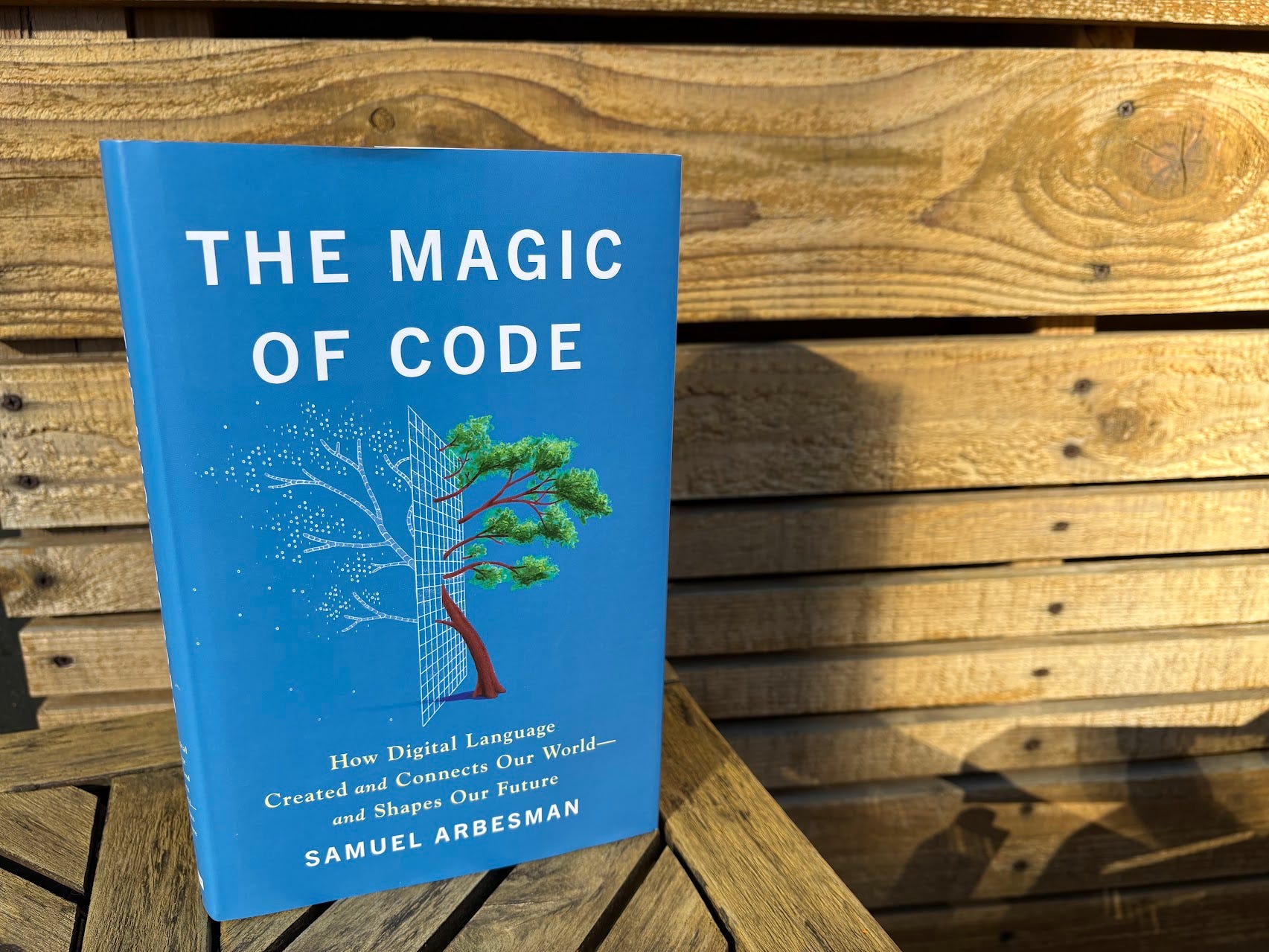
I’ve been a big fan of Samuel Arbesman ever since I started reading his Substack newsletter, Cabinet of Wonders. I recently picked up his latest book, The Magic of Code. I’m just cracking it open, but even in the first few pages, there’s already a lot to think about.
Issue #31 of Computing Education Things was written while listening to:
🌐 Cool things from around the internet
🔗 Logosystem — the biggest logo design library for inspiration.
🔗 OpenCode — an open source AI coding agent.
🔗 Isometric NYC — an isometric map of NYC—absolutely fascinating.
🔗 Data To Art — this project showcases works that transform datasets into art.

🔗 Quick Links
🎧 Listen to Computing Education Things Podcast
💌 Let’s talk: I’m on LinkedIn or Instagram
If you’re enjoying Computing Education Things, please like, comment, or share this post! You can also support this work through Buy Me A Coffee. And if you’re finding value in the newsletter, consider forwarding it to a friend, colleague, or family member to help the community keep growing. Thanks for reading!